
Strata is where pool advice gets messy, because people mix up three different questions: who owns the pool, who is responsible for keeping it safe, and which documents have to sit in a sale or tenancy packet.
Those questions overlap. They are not the same.
Key facts
- There is no blanket strata exemption from NSW pool safety law.
- Some schemes with more than two lots have specific exceptions in sale and tenancy document clauses. That is narrower than "strata pools do not need to comply".
- A shared common-property pool is usually an owners corporation responsibility.
- A private pool on your own lot is usually your responsibility as the owner.
- If you are leasing a property with a private pool, the ordinary landlord rules still matter, including the fact that non-compliance is not a tenancy pathway.
Shared scheme pool
- Usually common property
- Owners corporation typically handles compliance and works
- Sale and tenancy document rules can differ for multi-lot schemes
- Still not a free pass on safety
Private pool on your lot
- Usually your owner responsibility
- Registration and certification follow ordinary homeowner logic
- Selling and leasing documents track the normal pathways
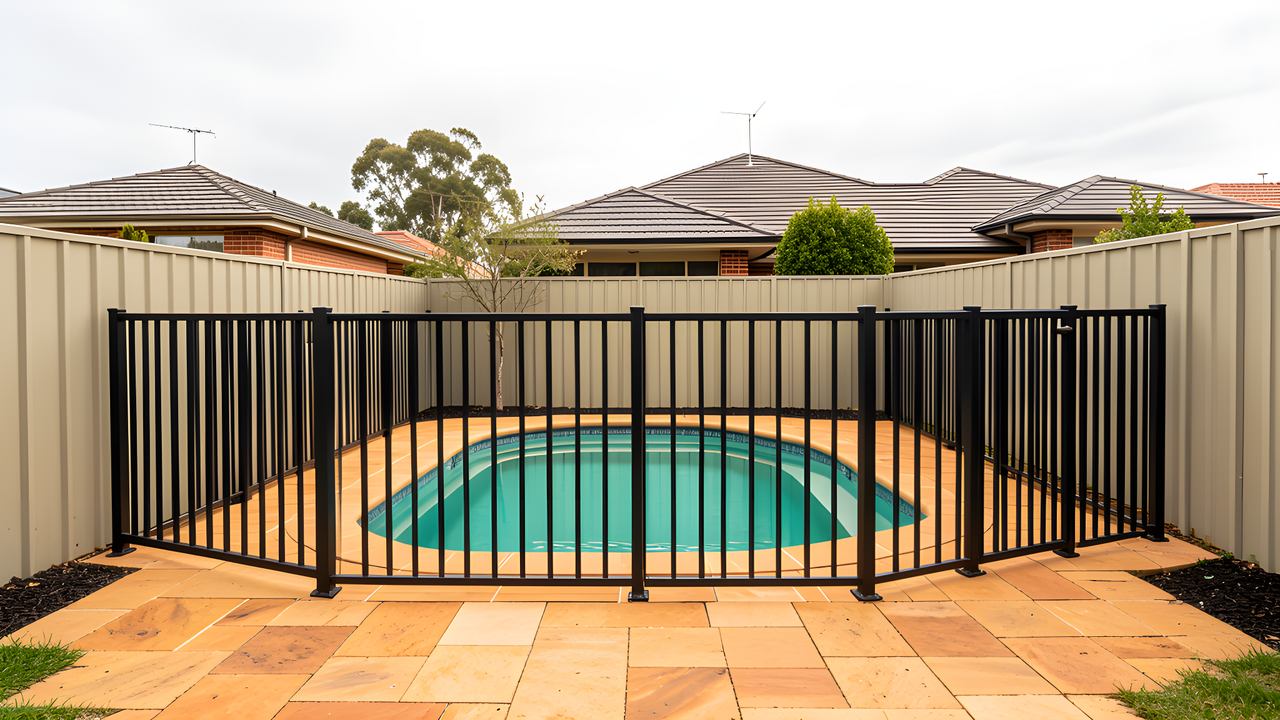
- Townhouse and villa pools often sit here
No blanket exemption
The phrase owners hear is "strata is exempt". What the legislation actually does is more precise. For some schemes with more than two lots, particular certificate-document requirements in sale or tenancy paperwork are treated differently.
That is not the same as saying the pool can be unsafe, unregistered, or ignored. If someone is selling you comfort with the word "exempt", ask which clause they mean and who is responsible for the physical pool.
Shared pools and the owners corporation
Where the pool is common property, the owners corporation is usually the body that has to keep the installation safe and organised. Individual lot owners still care, because access rules, works budgets and scheme management all land on owners eventually.
If you are on a committee, treat the pool like any other life-safety asset: current status, clear responsibility, and no reliance on "it was fine last summer".
Private lot pools
If the pool sits on your lot, plan as a normal homeowner would. Register it if required, keep the fence and surrounds in order, and get the right certificate when you sell or lease.
That is the common pattern for many townhouses and freestanding dwellings inside wider schemes. The scheme structure around you does not automatically move your private pool onto the common-property path.
For sale timing, use the selling guide. For tenancies, use the leasing guide. For the certificate split itself, use compliance vs non-compliance.
What I can help with
I work for homeowners. If the pool is yours to certify, I can inspect it, explain the outcome in plain English, and sort minor on-the-day issues where that is practical.
If the pool is common property and the owners corporation needs scheme-level advice, that is a different engagement path and often involves the strata manager and committee. I will tell you straight which side of the line you are on.
Frequently asked questions
Do strata pools have a blanket exemption from pool safety law?
No. There are specific transaction and certificate-document exceptions for some schemes with more than two lots, but that is not a blanket exemption from pool safety obligations.
Who is usually responsible for a shared strata pool?
For a shared pool in a multi-lot scheme, the owners corporation is usually responsible for the common-property pool. A private pool on your own lot is generally your responsibility.
I am selling a unit in a building with a shared pool. What changes?
Some sale and tenancy document rules are different for schemes with more than two lots. Your conveyancer or strata manager should confirm the document path for that scheme. Safety law does not simply disappear.
I have a townhouse with its own private pool. Am I under normal owner rules?
Usually yes. A private pool on your lot is typically treated like any other homeowner pool for registration and certification.
Can a landlord in strata use a non-compliance certificate for a private lot pool?
No. The no-non-compliance path for residential tenancies still applies to landlord obligations where those rules require a compliance or occupation certificate path.
Sources
- Swimming Pools Act 1992 (NSW)
- Swimming Pools Regulation 2018 (NSW)
- NSW Swimming Pool Register information
Last reviewed 22/07/2026. This is practical information from a registered certifier, not legal advice.