
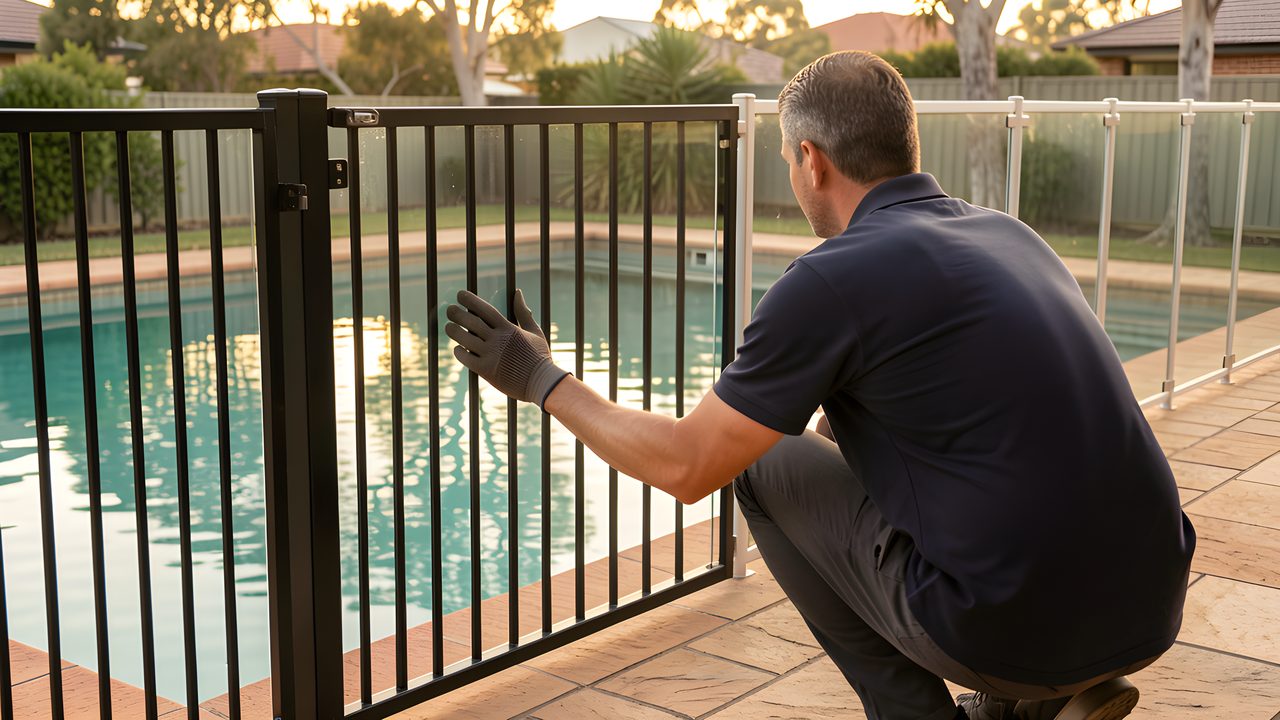
Most people find out about pool compliance at the worst possible moment: a week before an auction, or the day a property manager asks for the certificate. So let me give you the whole picture in one place, in the order it actually matters, so you know where you stand and what happens next.
I am a registered certifier.
My job is to assess a pool against the whole of NSW pool safety law, the Swimming Pools Act, the Regulation and the applicable Australian Standard, and then issue the certificate of compliance.
That is a wider job than measuring a fence.
It takes in the design and layout of the pool and its surrounds, the way the fence is built and where it sits, the gates and their hardware, the signage the law requires, how the pool relates to your house, boundaries and landscaping, and which edition of the standard applies to your pool given its age and your type of property.
Where something falls short, I would rather work out how to make it comply, often through a small design change, than simply hand you a fail. This guide is the reference I wish every owner had before I arrived.
Key facts
- In NSW, every swimming pool and spa capable of holding more than 300mm of water must be registered on the NSW Swimming Pool Register and comply with the safety requirements in the Swimming Pools Act 1992 and Regulation.
- Compliance covers more than the fence: fence design and geometry, non-climbable areas, gates and latching, resuscitation signage, and how the pool sits against the house, boundaries and landscaping.
- You need a valid certificate of compliance (or a relevant occupation certificate) plus a registration certificate to sell or lease.
- A certificate of compliance is valid for three years, unless the pool or its surrounds change in the meantime.
- The current standard is AS 1926.1-2012. A newer edition (AS 1926.1:2024) applies to new building work, not your existing pool, until NSW adopts it more broadly.
What does "pool compliance" actually mean in NSW?
Compliance has two parts, and people mix them up constantly.
The first is registration. Your pool has to be listed on the NSW Swimming Pool Register, a free online record maintained by the state. Registering is a quick job and does not mean your pool is safe or certified. It just means the government knows the pool exists.
The second, and the substantial one, is that your pool meets the safety requirements set out in the Swimming Pools Act 1992, the Swimming Pools Regulation and the relevant Australian Standard.
That is where the expertise sits, because it is not a single measurement.
It is a body of design and safety rules covering how the pool is enclosed, how the fence is built and where it is positioned, the non-climbable design of the fence and everything near it, the gates and their self-closing and self-latching hardware, the resuscitation signage the law requires, and the way the pool interacts with your house walls, doors, windows, boundary fences and landscaping.
When a certifier assesses all of that and it meets the rules, you are issued a certificate of compliance. That certificate is the document buyers, tenants, agents and conveyancers actually ask for.
So "is my pool compliant" is really "does the whole pool, its fence, its design and its signage meet the NSW rules that apply to it." The rest of this guide walks through when you need to prove it and how.
Do I need a pool compliance certificate?
You need a certificate of compliance in three situations, and one of them surprises people.
If you are selling, the certificate is part of the contract. It has to be attached before the property goes on the market, and getting it wrong can affect a buyer's rights.
I have written a full guide on selling a house with a pool in NSW because the timing is where deals get held up.
If you are leasing or renting the property out, you also need a certificate before a tenant moves in. The rules here are stricter than for selling in one specific way, covered in the leasing guide.
And if you are doing neither, you still have to keep your pool compliant at all times.
There is no legal requirement to hold a current certificate just to own a pool, but the safety rules apply every day the pool exists, not only when you sell.
Plenty of owners get an inspection for peace of mind, especially with young kids or grandkids visiting. That is not paperwork for its own sake: it is the difference between assuming your pool is safe and knowing it is.
What are the different pool certificates in NSW?
There are three documents that can speak to a pool's compliance status, and knowing which is which saves a lot of confusion.
A certificate of compliance says the pool meets the safety requirements. It is valid for three years and is the one you want.
A relevant occupation certificate is issued when a pool is newly built as part of the development approval, and if it was issued within the last three years it can stand in for a certificate of compliance when you sell or lease. If your pool is brand new, you may already have what you need.
A certificate of non-compliance is issued when a pool fails and the owner chooses not to fix it before selling. It lists what is wrong.
It cannot be used to lease a property, and it changes who carries the obligation to fix the pool. I explain that trade-off in the selling guide, because occasionally it is the sensible choice and usually it is not.
What does a certifier actually assess?
This is where I want to correct a common impression, because it matters for understanding what you are paying for. A pool compliance assessment is not a person glancing at a fence.
It is a structured assessment of your pool against the design and safety framework in the Act, the Regulation and the standard. The main things I work through are:
The fence design and geometry: the height all the way around, the gaps under and through it, and whether the way it is built creates any footholds.
The non-climbable design: the clear zones the rules require around the fence, and everything near it (landscaping, structures, furniture, pool equipment) that could turn a compliant barrier into a climbable one.
The gates and hardware: that every gate swings the right way, closes and latches on its own from any position, and has its release out of a child's reach.
The signage: that a compliant resuscitation sign is present and legible where the law requires it.
The interfaces: how the pool meets your house walls, doors and windows, your boundary fences and any decking or retaining, because these are part of the barrier even though they are not "the pool fence." And which rules apply: the correct edition of the standard for your pool's age, and any specific provisions for waterfront blocks, large or small lots, or indoor pools.
Every measurement behind this is set out in the pool fence and barrier rules guide, the signage detail is in the CPR signage guide, and how to get the design right from the start is in designing a compliant pool.
A lot of what comes up is small and practical: a tired gate hinge, a latch out of adjustment, a pot plant left too close to the fence, a faded sign.
Most small faults, we can sort out how to put right on the day, rather than turn into a second visit. Most inspections end with a list of problems.
Mine end with a solid understanding of what is required, help right through the process, and the minor issues sorted before I leave site. The faults I see most often are in the common inspection fails.
Which standard and rules apply to my pool?
This trips people up because there is more than one edition of the fence standard, and different provisions for different properties, and the one that applies depends on when your pool was built or approved and where it sits.
NSW handles this through the Swimming Pool Register, which provides separate self-assessment checklists for pools built before 1 September 2008, between 1 September 2008 and 30 April 2013, and on or after 1 May 2013, plus specific checklists for waterfront blocks, large properties of two hectares or more, small lots under 230 square metres, indoor pools and spas.
Older pools are generally assessed against the standard that applied when they were built, but if you have modified the pool or its surrounds since, current rules can apply.
Knowing which framework applies to your pool, and reading it correctly, is a large part of what a certifier does. If you are not sure which is yours, that is a normal thing to ask before booking.
What is the NSW Swimming Pool Register?
The register is the state's online record of every pool and spa, and it is where certificates are lodged.
You register your own pool (it is free), and when your pool passes assessment, your certifier lodges the certificate against your property so it is on the record.
Councils, buyers and conveyancers can check that a certificate exists.
Registration is a legal requirement for owning a pool, separate from the certificate. If your pool is not registered, that is the first thing to sort out.
I walk through the whole process, including how to check whether your pool is already on there, in the NSW Swimming Pool Register guide.
What about spas?
Spas count as pools under the law if they can hold more than 300mm of water, which almost all of them can.
The one useful difference is that a spa can be exempt from having a full barrier if it is fitted with a lockable, child-resistant cover that meets the standard and is kept locked whenever the spa is not in use.
Swim spas do not get that exemption: they are treated as pools and need a compliant barrier. The details, including which covers actually qualify, are in the spa compliance guide.
How long does compliance last, and what can undo it?
A certificate of compliance is valid for three years.
But compliance is a physical state, not just a piece of paper, so a few ordinary things can quietly undo it before the three years are up: a new outdoor setting or BBQ moved near the fence, a tree grown into a foothold, a gate hinge worn so it no longer self-closes, a resuscitation sign faded in the sun, a landscaping change that alters the non-climbable design.
None of these need a tradesperson. They need someone to notice.
Walking your pool surrounds once a season is the cheapest compliance insurance there is.
What happens if my pool is not compliant?
Nothing dramatic happens the moment something falls short. What matters is that you cannot sell or lease until it is resolved, and that a non-compliant pool is a genuine drowning risk for any small child who reaches the water. Councils can and do act on unsafe pools.
If you are mid-sale and something fails, you generally have two paths: fix it and get the certificate, or proceed with a certificate of non-compliance and pass the obligation to the buyer under specific conditions.
Most minor items I can resolve on the day, and for larger ones, the value of a certifier is working out the most practical way to bring the pool up to standard, sometimes a repair, sometimes a design change, rather than just declaring it failed.
The selling guide covers both paths honestly.
A note on the 2024 standard
You may have read that the fence standard was updated in 2024. It was: AS 1926.1:2024 was published, and it is being brought in for new pool building work through the National Construction Code.
It does not change what your existing pool has to meet today. I keep a plain-English page on the 2024 standard up to date so you can see what is coming before it affects you, without having to read the standard yourself.
Frequently asked questions
What does a pool certifier actually check in NSW?
The whole pool against the safety framework: fence design and geometry, non-climbable zones, gates and latching, resuscitation signage, and how the pool meets your house, boundaries and landscaping, assessed against the edition of the standard that applies to your pool.
Do I legally have to have a pool compliance certificate just to own a pool in NSW?
No. You must register the pool and keep it compliant at all times, but a current certificate is only required when you sell or lease. Many owners still get one for peace of mind.
How long is a pool compliance certificate valid in NSW?
Three years from issue, provided the pool and its surrounds are not changed in a way that affects compliance.
Can I inspect and certify my own pool?
You can self-assess against the register's checklists to see where you stand, but a certificate of compliance can only be issued by your local council or a registered certifier.
My pool is very old. Does that mean it can never comply?
Not at all. Older pools are assessed against the rules that applied when they were built, and most pass once ordinary maintenance and design issues are addressed. Age is rarely the real problem.
Sources
- NSW Government, Owning a pool or spa: your obligations: https://www.nsw.gov.au/housing-and-construction/building-or-renovating-a-home/pools-and-pool-safety/owner-obligations
- NSW Swimming Pool Register: https://www.swimmingpoolregister.nsw.gov.au/information
- Swimming Pools Act 1992 (NSW) and Swimming Pools Regulation 2018 (NSW): https://legislation.nsw.gov.au
- Standard AS 1926.1-2012, Swimming pool safety: Safety barriers for swimming pools
Last reviewed 22/07/2026. This is practical information from a registered certifier, not legal advice.