
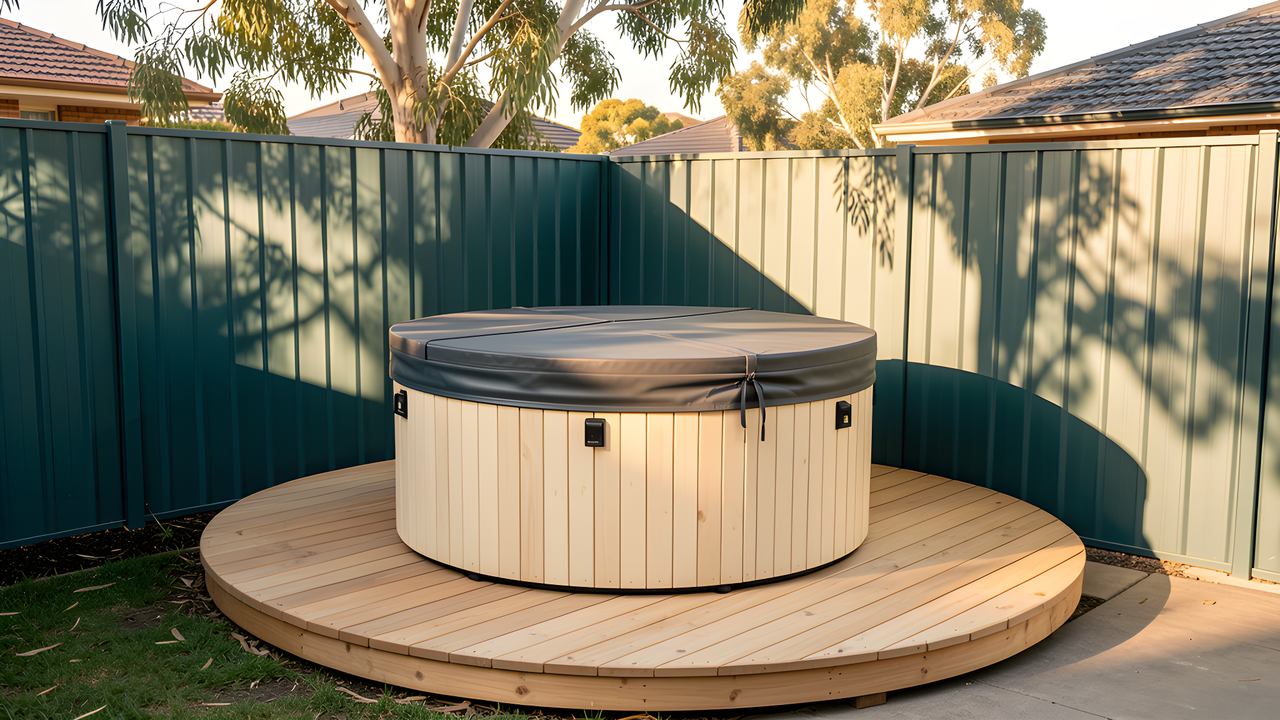
The question I get asked most about spas is "surely my spa does not need a fence." The answer is: it depends entirely on what kind of spa it is and how it is covered, and the distinction matters more than almost anyone realises.
Get it right and a lockable cover can save you a fence. Get it wrong, particularly with a swim spa, and you are non-compliant without knowing it.
Here is the whole picture.
Key facts
- Under NSW law, a spa that can hold more than 300mm of water is treated as a swimming pool: it must be registered and, by default, have a compliant fence.
- A spa pool is exempt from needing a full fence if it has a lockable, child-resistant cover that meets the standard and is kept locked whenever the spa is not in use.
- A product marketed as a swim spa is often assessed as a swimming pool rather than a spa pool for the cover pathway. The product and installation still need to be checked against the statutory definitions rather than assumed from the label alone.
- The same certificate rules apply: to sell or lease a property with a spa, you generally need registration plus a certificate of compliance or occupation certificate.
Spa pool pathway
- Still a pool if it can hold more than 300mm of water
- Must be registered
- May use a compliant lockable child-resistant cover instead of a full fence, if the cover is the right product and kept locked when not in use
- Soft thermal blankets and clip-on lids do not qualify
Swim spa pathway
- Often assessed as a swimming pool rather than a spa pool for the cover path
- Must be registered
- Plan for a compliant fence unless the product and installation clearly qualify another way
- Do not assume the spa cover rules apply because of the product name
Does my spa need a fence in NSW?
By default, yes. A spa that holds more than 300 millimetres of water is a swimming pool in the eyes of the law, which means it needs to be registered and surrounded by a compliant fence, exactly like an in-ground pool.
Almost every spa can hold more than 300 millimetres, so "it's only a spa" does not exempt you.
The reason people think spas are different is the cover exemption, which is real but conditional. It is the next section, and the conditions are where compliance is won or lost.
When is a lockable cover enough instead of a fence?
A spa pool can be exempt from the barrier requirement if it is fitted with a child-resistant cover that meets the standard and is kept locked whenever the spa is not in actual use. That is the trade: a compliant, lockable, child-resistant cover in place of a fence.
Two words in that sentence do the heavy lifting. "Compliant" means a purpose-made child-resistant cover that meets the relevant standard, not a floating thermal blanket or a soft vinyl lid held down with clips.
And "locked" means actually locked, every time the spa is not in use, not just resting on top. The exemption depends on the cover being both the right product and used correctly.
If the cover is off, damaged, or not lockable, the exemption does not apply and the spa needs a fence like any other pool.
So the honest test is: is there a proper lockable child-resistant cover, in good condition, that will realistically be locked every time. If yes, you likely qualify for the exemption.
If the cover is soft, tired, or the kind that never actually gets locked, you are better off with a fence, and I can talk you through which path is less hassle for your setup.
Why are swim spas treated differently?
This is the trap. A swim spa, the longer type with a current you swim against, is usually treated as a swimming pool rather than a spa pool for the cover pathway. Plan for a compliant fence, and have the product and installation checked rather than assumed from the label alone.
The logic is size and use: a swim spa is effectively a small pool, often too large for a genuinely child-resistant cover to do the job a fence does.
So if you have a swim spa, do not assume the spa cover rules apply to you, because they do not. Plan for a fence that meets the same rules as any pool fence, which are set out in the fence rules guide.
Do portable and inflatable spas count?
If it can hold more than 300 millimetres of water, yes, the same rules apply, regardless of whether it is a permanent built-in spa or a portable one you bought at the start of summer.
A portable spa is not exempt just because it is portable. It needs to be registered and either fenced or, if it is a spa pool with a compliant lockable child-resistant cover kept locked, covered under the exemption.
The 300 millimetre threshold, not the price or permanence, is what decides it.
What do I need to sell or lease a property with a spa?
The same as any pool.
Because a spa over 300 millimetres is a pool under the law, selling or leasing a property with one means you generally need the pool registered plus a certificate of compliance or a relevant occupation certificate.
If your spa relies on the cover exemption rather than a fence, the assessment confirms that the cover is compliant, in good order and lockable. The general process is the same one I set out in the main compliance guide.
What does a certifier assess on a spa?
I assess your spa against the same safety framework as any pool, and then advise on the simplest way to close any gap.
If your spa has a fence, that means the fence design and height, the gaps, the non-climbable areas around it, and the gate and latch.
If it relies on the cover exemption instead, I assess whether the cover is a genuine child-resistant type, in good condition, and actually lockable and used that way.
Either way I check that a resuscitation sign is present in the spa area and that the spa is on the register.
Small issues, like a cover latch that needs adjusting or a faded resuscitation sign, are the kind of thing we can usually sort out how to put right on the day rather than sending you away with a list.
Frequently asked questions
Does a spa need a fence in NSW?
By default yes, because a spa holding more than 300 millimetres of water is treated as a pool. The exception is a spa pool with a compliant, lockable, child-resistant cover kept locked whenever it is not in use.
Is a thermal cover or vinyl lid enough to exempt my spa from a fence?
No. The exemption requires a purpose-made child-resistant cover that meets the standard and is kept locked. A thermal blanket or soft clip-on lid does not qualify.
Do swim spas need a pool fence?
Usually yes. A product marketed as a swim spa is often assessed as a swimming pool rather than a spa pool for the cover pathway, so plan for a compliant fence unless the product and installation clearly qualify another way.
Does my portable or inflatable spa need to comply?
If it can hold more than 300 millimetres of water, yes. Portability does not exempt it. It must be registered and either fenced or covered under the spa cover exemption.
Do I need a pool certificate to sell a house with a spa?
Generally yes, because the spa is a pool under the law. You need registration plus a certificate of compliance or occupation certificate, the same as for a pool.
Sources
- NSW Government, Owning a pool or spa: your obligations: https://www.nsw.gov.au/housing-and-construction/building-or-renovating-a-home/pools-and-pool-safety/owner-obligations
- NSW Swimming Pool Register: https://www.swimmingpoolregister.nsw.gov.au/information
- Swimming Pools Act 1992 (NSW) and Swimming Pools Regulation 2018 (NSW): https://legislation.nsw.gov.au
Last reviewed 22/07/2026. This is practical information from a registered certifier, not legal advice.