
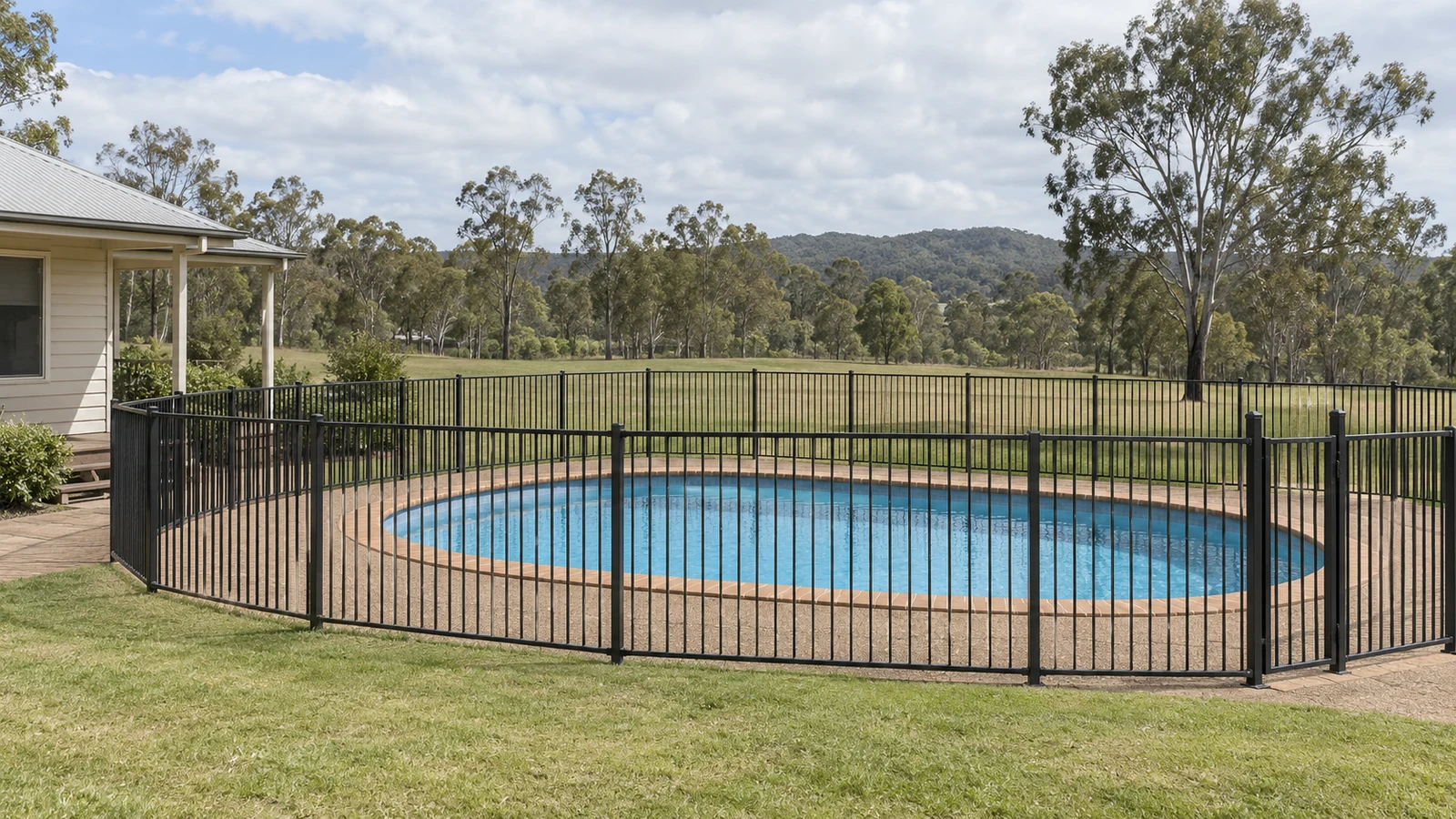
Hawkesbury City Council works on over 5,000 backyard swimming pools. They are spread across an area so large that the Hawkesbury is really several places wearing one council boundary.
There is the town end: Windsor, Richmond, South Windsor, Bligh Park, McGraths Hill, Pitt Town and Wilberforce, on suburban blocks along the Hawkesbury Nepean floodplain.
There is the foothills end: Kurmond, Kurrajong, Grose Vale, Glossodia and Freemans Reach, where half acre and acre blocks sit on slopes running down toward the river.
And there is the outer end: Bilpin, Berambing, Colo Heights, St Albans and the blocks out past Wisemans Ferry, where a pool might be the only pool on the ridge.
Those three places fail in three different ways, which is why one set of advice does not cover the Hawkesbury.
The Hawkesbury at a glance
- Hawkesbury City Council administers the Swimming Pools Act 1992 and runs a swimming pool inspection program. The Council seat is at Windsor.
- Council records over 5,000 backyard swimming pools in the local government area.
- Suburbs I inspect include Windsor, South Windsor, Richmond, North Richmond, Bligh Park, Pitt Town, Wilberforce, McGraths Hill, Mulgrave, Clarendon, Ebenezer, Freemans Reach, Glossodia, Grose Vale, Grose Wold, Kurmond, Kurrajong, Kurrajong Heights, Kurrajong Hills, Bowen Mountain, Bilpin, Berambing, Cattai, Colo Heights, Agnes Banks, Oakville, Maraylya, Vineyard, Windsor Downs, Yarramundi and Richmond Lowlands.
- The settled land is spread thinly across a very large area, so booking around travel and access matters more here than almost anywhere.
- Floodwater moves fences, undermines posts and deposits material, and the upland areas bring frost and fire constraints into the same yard.
- Premises with more than two dwellings, and tourist or visitor accommodation, are inspected at least once every three years.
What this area does to a pool fence
Distance is the first factor. On a rural block the pool may be fifty metres from the house, with a shed, a tank, a pump shed and a machinery area between them. The fence still has to separate the pool from every residential building and from anything a child can climb, and on acreage that means a much longer perimeter than owners expect.
Boundary fencing is the second. Rural boundary fences are built for stock, not for children: four strand wire, post and rail, star pickets and mesh. None of that is a compliant pool barrier. Where a boundary is going to form part of the barrier, it has to be built and measured as a barrier, not as a farm fence.
Water and ground conditions come third. Parts of the Hawkesbury flood, and floodwater moves fences, undermines posts and deposits material. On the slopes above the floodplain, movement and runoff do the same job more slowly. A fence that was plumb when it was built is often leaning on a block where water crosses it.
Fourth, the climate. Hot dry summers and frosty mornings both work against timber, paint and any fence that relies on regular tensioning to stay tight.
Who can issue the certificate here
Hawkesbury City Council administers the Act in the local government area, keeps the local record of pools, investigates complaints and inspects under its program, including applications for certificates and for exemptions, and follow up on notices issued by accredited certifiers.
You are not required to use Council. An accredited certifier can inspect and issue the same certificate, which is drawn from the NSW Swimming Pool Register either way. Under the Regulation, an inspection request must be actioned within 10 business days.
Out here the practical difference is travel. A council officer covering an area this size may only be in your end of the Hawkesbury on certain days. Booking directly means choosing a time that suits the property and the access rather than fitting into a round. Book, and you get one certifier the whole way through.
What I check in the Hawkesbury
I start with the whole property rather than the pool, because on acreage the pool is only one part of the picture. Where the dwellings are, where the outbuildings are, what the boundary actually consists of, what the water is and whether anything is being used for swimming that is not a typical pool.
Then the fence, walked end to end. Height measured from outside the pool area at every point. Gaps under, between and through panels. Gates for self-closing, self-latching and outward swing, latch release at 1.5m, shield where a tubular gate needs one, and the 900mm non-climbable zone on both sides. On rural fences I pay particular attention to the mesh, the wire spacing and whether the fence changes type partway along a run.
Then the things that accumulate near a rural pool: tanks, pump and filter housings, firewood, sheds, machinery, sleepers and garden mounding. All of it can be a foothold. What the visit covers is set out on the inspections page, and the numbers are in the fence rules guide.
If something does not pass
On Hawkesbury properties the common findings are a boundary fence being relied on where it does not qualify, a fence run that is long enough to have developed several separate defects, a gate that has lost its spring or dropped on its hinge, and equipment or tanks sitting inside the non-climbable zone. If something does not pass and it is minor, we work out how to put it right there and then.
You leave with your certificate the same day either way, with the outstanding items set out in writing where the pool does not pass.
Frequently asked questions
There are over 5,000 backyard pools in the Hawkesbury. How long does an inspection take?
Most single pool properties take between one and two hours on site, and it runs longer on acreage where the boundary, outbuildings and a dam all need to be considered. I would rather spend the extra time and give you a definite answer than rush it and leave you with questions.
I have a dam on the property. Does it need a pool fence?
A farm dam used for stock, irrigation or drainage is a different thing from a swimming pool, and the Act turns on how the water is actually used rather than on what you call it. If a dam or a converted structure is being used for swimming, it needs to be looked at properly. This is worth assessing on site rather than assuming either way.
Is the boundary fence enough on a rural block?
Sometimes, but rural boundary fencing is usually built for livestock rather than for children, and a four strand wire fence or a post and rail is not a compliant pool barrier. On acreage there is often a choice between fencing the pool separately and using part of the boundary, so it is worth working out which suits before you spend.
The property is on tank water and unsewered. Does that matter?
It can affect what is practical. Pump and filter locations, tanks, absorption areas and shedding all end up somewhere near the pool, and any of them can intrude into the non-climbable zone. I look at all of it in context rather than as separate items.
Do you travel out as far as Bilpin, Colo Heights or Wisemans Ferry?
Yes. The Hawkesbury is a big area and it is worth confirming the address and the access when you book, because driveways, gates and travel time all matter out here.
Sources
- Hawkesbury City Council, swimming pool safety
- Swimming Pools Act 1992 (NSW)
- Swimming Pools Regulation 2018 (NSW)
- NSW Swimming Pool Register, owner checklists
- Standard AS 1926.1-2012, Swimming pool safety: Safety barriers for swimming pools
Last reviewed 12/10/2026. Practical information from a registered certifier, not legal advice.